

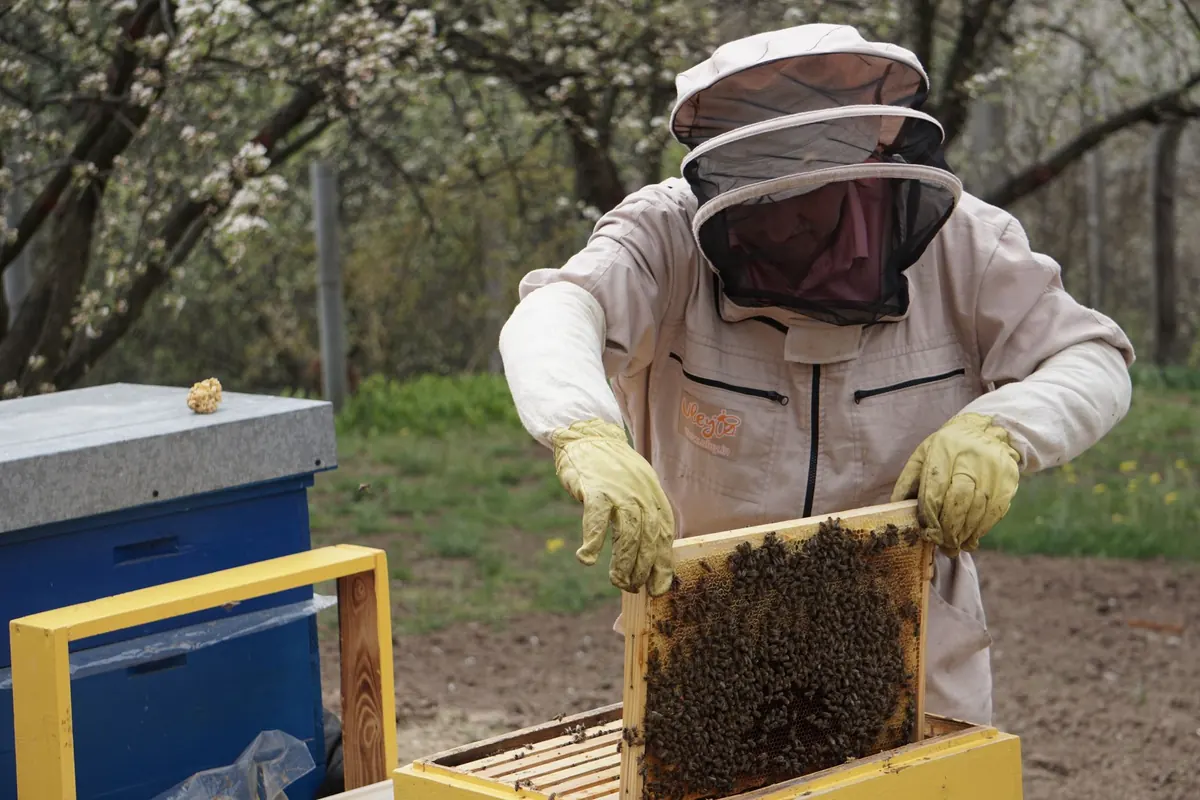
Most people come to beekeeping for the honey. The first year rarely gives you much of it. What it gives you instead is a slow education in watching: learning what a healthy brood frame looks like, noticing when a colony is running out of room, and understanding that a hive left alone for three weeks in June will have made decisions without you. The calendar below follows a typical UK season. Your bees will not read it, but it gives you somewhere sensible to start.
Before the bees arrive: kit, site and a plan
Buy the hive before you buy the bees, and set it up where it will live. A spare hive in the shed is not a spare hive — it is a puzzle you will be assembling at dusk with a swarm in a cardboard box beside you.
A basic starting kit looks like this:
- A complete hive — National, Langstroth or similar — with floor, brood box, queen excluder, two supers, crown board and roof
- Frames and foundation, plus at least a few spares built and ready
- Smoker, hive tool, bee suit, gloves and boots you can move in quickly
- A feeder for syrup, and a spare one for later in the year
- Hive stand or blocks, a ratchet strap or bricks for the roof
- A notebook, and a marker pen for labelling frames and boxes
For the site, aim for sun in the morning, shelter from prevailing wind, level ground, and space behind the hive so you can work without standing in the flight path. Water nearby helps, and a quiet word with neighbours saves a lot of awkwardness later. Then book your bees: a nucleus colony from a reputable local supplier, or a swarm through your association. Spring nuclei are usually available from April onwards, and good suppliers are booked up early.
Join your local beekeeping association if you possibly can. The equipment libraries, extractors and second opinions are worth the subscription on their own, and someone will nearly always come and look at a strange-looking frame with you.
March and April: the season wakes up
Once the weather is mild, still and dry, with bees flying freely, it is reasonable to open the hive. Early inspections are quick ones: lift the roof, check the cluster has food, confirm the queen is laying, and close up. Ten minutes is plenty. Do not chase the bees through every frame in cold weather for the sake of curiosity.
As the colony builds, inspections settle into a routine roughly every seven to nine days through the active season. Work to a sequence so you do not forget something important:
- Approach from the side, give one or two gentle puffs of smoke at the entrance, and wait a moment.
- Lift the roof and crown board, and note the size of the cluster and how the bees behave.
- Work from the outer frames inwards, keeping the brood nest together and returning frames in the same order.
- Look for eggs, young larvae in curled white crescents, a solid pattern of sealed brood, and queen cells.
- Check stores and space — has the queen run out of empty comb to lay in?
- Close up, put everything back as it was, and write down what you saw and the date.
May and June: swarm season
This is when a colony decides it has outgrown its box. Queen cells appear — first as open cups, then as sealed cells that look like peanuts — and the old queen leaves with roughly half the workers, usually on a warm, still day after a spell of good weather. Swarming is not a disaster, but an unprepared beekeeper loses the season's momentum and a fair number of bees.
Weekly checks matter now. Give space early: add a super before the brood box is packed, and keep drawn comb or foundation available. If you find charged queen cells with larvae, you have decisions to make quickly — either remove the old queen and let the colony raise a new one, or make an artificial split. Simply tearing down every queen cell and hoping rarely works; miss one and they are gone. If your bees do swarm, stay calm. A clustered swarm can usually be shaken into a box and hived, and a beekeeper nearby will often help.
Reading the brood nest
By midsummer you should be able to spot the difference between a queen laying well and a queen failing. Patchy brood, drone-laying workers or a brood nest full of nectar where eggs should be all tell a story. Ask an experienced beekeeper to look with you the first time you are unsure. This is the single most useful skill you will build in year one.
July and August: harvest, and an honest look at varroa
When the supers are capped — at least two-thirds of the cells sealed with pale wax — you can take the honey. Leave the colony plenty of its own stores, and remember that a first-year colony may need all of it. Extracting is best done in a closed room or with the windows shut, or you will host every wasp in the parish.
Late summer is also the point to assess varroa levels and treat if needed. Monitor with a sugar roll or an inspection tray, and follow the instructions on any product precisely, along with current guidance for your area. Treatments, timings and permitted products change, so if you are unsure, ask your association or a veterinary professional rather than guessing from a forum.
September to November: winter preparation
Everything you do now decides how the colony looks in March. Feed thin colonies thick syrup if they are short of stores, aiming to finish before the weather turns cold and the bees stop taking it down. Fit a mouse guard and reduce the entrance. Insulate above the crown board, tilt the hive very slightly forward so rain runs off rather than in, and strap or weight the roof against winter gales. Cold alone rarely kills a colony; damp and starvation do.
December to February: hands off, mostly
Leave them alone. Opening a hive in midwinter helps nobody. Heft the hive from behind to judge its weight — if it feels light, put a block of fondant over the crown board hole. Clear snow from the entrance. Otherwise, use these months to clean and repair kit, build frames for spring, order what you need, and read something that is not a forum argument. Winter meetings at your local association are worth the trip.
What your first year is really for
Aim to end the season with a healthy, well-fed colony rather than a record honey crop. Keep notes, even bad ones; next April you will be grateful for the reminder of what that colony did last year. Ask for help early rather than after something has gone wrong. Most beekeepers spend their first year slightly behind and their second year faintly competent, and that is entirely normal.
Photo: Dmytro Glazunov / Pexels